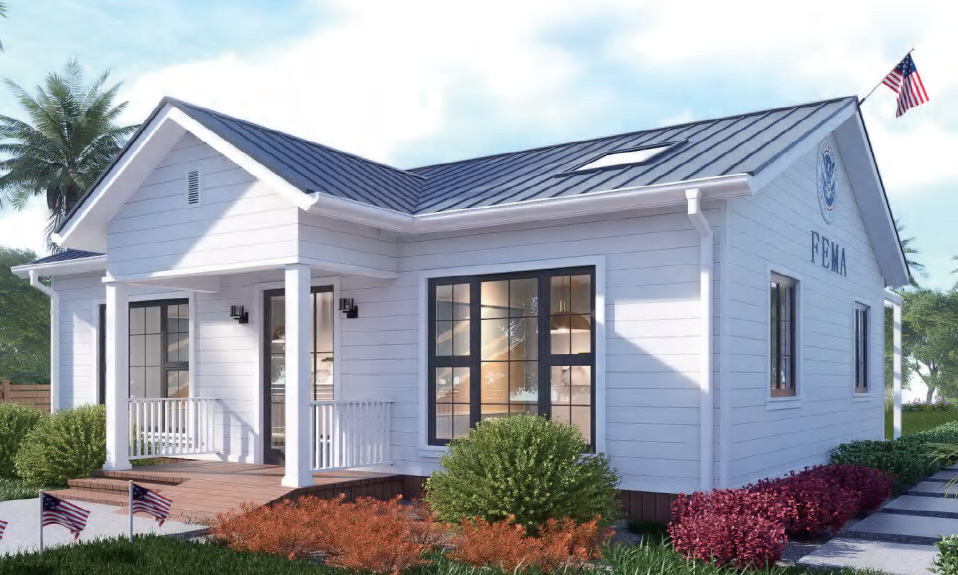
Amid global trends toward lightweight, high‑efficiency, and low‑carbon development in the construction industry, the drawbacks of traditional brick‑and‑concrete and concrete buildings—long construction periods, high pollution, and severe constraints imposed by site and climate conditions—are becoming increasingly prominent. As a core category of new prefabricated buildings, light steel frame houses have completely revolutionized traditional construction methods.
A light steel frame house is a modern building that uses cold‑formed, thin‑walled steel (such as hot‑dip galvanized or aluminum-zinc-coated steel strips) as the main load‑bearing frame, assembled with new lightweight wall panels and insulation materials. Compared with traditional brick‑and‑concrete structures, the biggest difference in light steel frame houses lies in the fundamental change in construction methods—shifting from “on‑site construction” to “factory manufacturing + on‑site assembly.” This transformation not only changes the building process but also redefines people’s perception of “building a house.”
The core advantages of light steel frame houses start at the factory production stage. The light steel keels, frame structures, wall panels, roofing systems, pre‑embedded door and window components, etc., are all uniformly prefabricated in specialized factories using automated equipment. All prefabricated components undergo quality inspection, anti‑rust treatment, and thermal and acoustic insulation assembly before leaving the factory, achieving modular finished product output without the need for secondary on‑site processing.
The overall construction period for prefabricated light steel frame houses is generally around 30 to 90 days. The specific installation time mainly depends on the house area, foundation work, and interior and exterior finishing requirements. This rapid assembly mode is not only perfectly suited for time‑sensitive scenarios such as temporary accommodation on overseas construction sites, emergency disaster relief, and fast‑opening tourist attractions, but also helps overseas self‑builders significantly save construction time and move in quickly.
To address temperature variations across different regions worldwide, light steel frame houses adopt specialized envelope structure designs. Walls, roofs, and floors are filled with high‑density rock wool and polyurethane insulation materials, combined with sealed thermal‑break designs, solving the problems of traditional houses being cold in winter, hot in summer, and having large temperature differences.
With a scientific frame structure design, light steel frame houses have strong disaster resistance. The overall frame is an integrally formed flexible steel structure that can effectively buffer seismic shocks, achieving an earthquake resistance level of up to magnitude 8. Meanwhile, the main light steel keels adopt galvanized anti‑corrosion treatment, and the entire house has no wooden components, fundamentally eliminating termite and mold corrosion. It features rust‑proof, moisture‑proof, corrosion‑resistant, and dust‑proof properties. Under normal use, the service life of the house can exceed 50 years, requiring no frequent maintenance during long‑term outdoor use, significantly reducing subsequent maintenance costs for overseas users.
Light steel frame houses are typical green prefabricated buildings, featuring low‑carbon and environmentally friendly processes throughout. The factory prefabrication model enables precise material usage, reducing construction waste and water consumption, in line with sustainable development requirements. In addition, the main light steel structure is 100% recyclable. Modules can be disassembled, reconfigured, and relocated. After project relocation, they can be rebuilt for secondary use, avoiding waste of building materials and realizing the circular use of building resources, which is a mainstream trend in global low‑carbon building development.
From a long‑term perspective, the life‑cycle cost advantages of light steel frame houses are even more obvious. These advantages are reflected in multiple aspects:
Short construction period reduces labor costs and capital occupancy costs.
Low material wastage rate reduces material waste.
Low maintenance costs, no frequent repairs needed.
Energy‑saving and electricity‑saving, significantly reducing electricity bills during the usage phase.
The wall thickness of light steel structures is much thinner than that of traditional brick‑and‑concrete walls. This means that under the same floor area, light steel frame houses can increase usable space. For areas with high land costs, this is a good choice. Since light steel structures do not require load‑bearing walls, interior spaces can be freely partitioned according to needs. Whether it is an open kitchen, a multi‑function loft, or a comfortable balcony leisure area, all can be achieved through flexible design. The frame structure formed by light steel keels enables large‑span spaces, providing ample conditions for personalized floor plan designs.
The application scenarios for light steel frame houses are extremely wide:
Rural self‑built homes: fast, high‑quality, and reasonably priced, they are becoming the first choice for more and more rural families.
Cultural tourism homestays and resort villas: can be built in large areas quickly, with diverse styles and high integration with the natural environment.
Post‑disaster emergency housing: rapid response and quick construction, able to quickly restore basic living conditions in disaster‑stricken areas.
Temporary offices and construction site accommodations: movable, reusable, and highly adaptable.
Public buildings such as schools and hospitals: can be deployed quickly to meet urgent construction needs.
Overseas engineering projects: components can be shipped in standard containers, suitable for fast delivery of international projects.
One of the biggest features of light steel frame houses is their extremely high customizability, completely different from traditional fixed‑layout buildings. Relying on modular assembly design, based on overseas users’ land area, number of occupants, and functional needs, rooms can be freely combined, added, or removed, flexibly creating various layouts such as one‑bedroom, multi‑bedroom, duplex with mezzanine, with terrace, with courtyard, or with commercial partitions.
Once traditional brick‑and‑concrete buildings are completed, they cannot be moved. Project relocation or site renovation requires demolition and scrapping, with all materials wasted and high investment costs. In contrast, light steel frame houses are bolt‑assembled structures without on‑site casting and solidification. They are completely detachable, transportable, and can be reassembled at different locations.